Where Financial Planning Complements Accountancy
Here’s a scenario that plays out more often than most Accountants realise.
A long-standing client, a business owner in their mid-fifties, is approaching a significant liquidity event. They’re selling a stake in the business. The proceeds are substantial. They need advice on Pension Contributions, Capital Gains Tax planning, Investments and Inheritance Tax.
You handle the tax side. But who handles the rest?
If they find their own Financial Adviser, that adviser builds a relationship with your client independently of you. Over time, that adviser may become another trusted voice to your client, reducing the opportunity for you to remain at the centre of wider financial discussions.
The Value of a Collaborative Financial Advice Approach
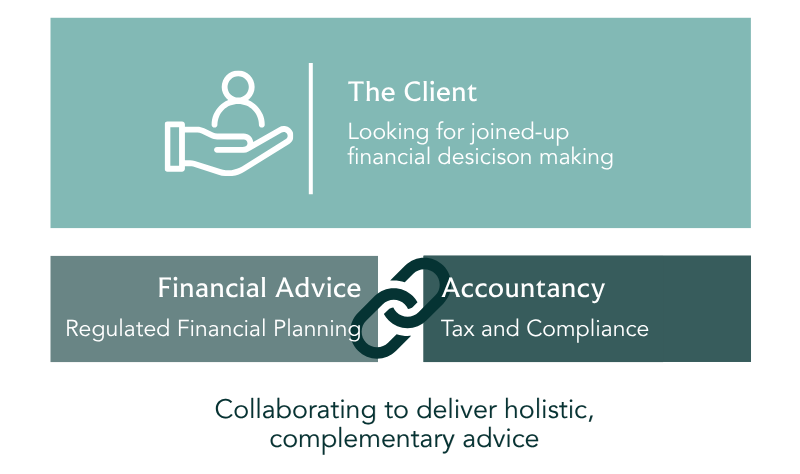
The most effective model we’ve seen, and one that can help strengthen client relationships, is what we call the triangle approach.
It’s simple: the client sits at the top. The Accountant and the Financial Adviser sit at the base, working in close collaboration to deliver holistic, complementary advice.
In this model, there’s no duplication, no crossed wires and no competition for the client relationship. The Accountant continues to own the tax and compliance work. The Financial Adviser handles regulated Financial Planning. And together, the strategies align – pension contributions optimised against tax position, investment decisions made with full awareness of the client’s business structure, Inheritance Tax planning approached holistically.
For clients, it can lead to more joined-up financial decision-making. For Accountants, it can help strengthen long-term client relationships. A client who receives this advice through their Accountant is more likely to benefit from a consistent and coordinated experience.
Two ways to add further value to your clients
One of the most underappreciated aspects of an Accountancy Partnership is the breadth of referral opportunity it creates.
In practice, this means a single Accountancy Partnership can generate two distinct referral streams and deliver meaningful value to a wider range of your clients.
What to Look for in a Financial Planning Partner
Not all Financial Planning partnerships are the same. The right Partner should complement the service you already provide, helping your clients access specialist support while allowing you to remain at the centre of the relationship.
At Wren Sterling, partnerships with Accountancy Practices are at the heart of how we’ve grown. Several of our Adviser Teams were established directly through acquisitions of accountancy firms, creating relationships built on years of trust and collaboration. We understand the important role Accountants play in their clients’ lives and work as an extension of that trusted adviser network.
When evaluating a potential Partner, look for a firm that:
- Provides regulated, personalised advice, giving your clients the same level of care and professionalism that you would expect for your own.
- Takes a genuinely collaborative approach, keeping you informed and involved where appropriate rather than working in isolation.
- Has experience of working alongside Accountants and understands the important distinction between Tax Advice and regulated Financial Advice.
- Offers a broad range of services, whether your clients need personal Financial Planning, workplace solutions, or support with both.
The Commercial Benefits of Partnership
While client outcomes should always come first, there can also be commercial benefits to having a formal partnership in place.
A structured referral partnership with a regulated Financial Planning firm can generate an additional income stream for your practice. When you refer a client for Financial Advice, and that advice is delivered well, there is typically a commercial arrangement in place that recognises the value of that introduction.
Depending on the partnership structure, this can create an additional revenue stream without increasing your regulatory responsibilities.


 Client Login