Client Login




It is a mixed picture across markets. Oil rose sharply this week continuing its strong performance for the year. However, this has not been fully translated into the broader equity markets, where returns have bene modest or negative in most regions.
In fixed income, the returns have been generally softer. UK government bonds fell over the week and remain negative for the year, reflecting ongoing pressure from interest rate expectations. UK corporate bonds also declined slightly, suggesting some widening in credit spreads. High yield was relatively stable and remains positive for the year.
Currency moves were limited with modest gains in the Japanese yen and US dollar versus sterling.
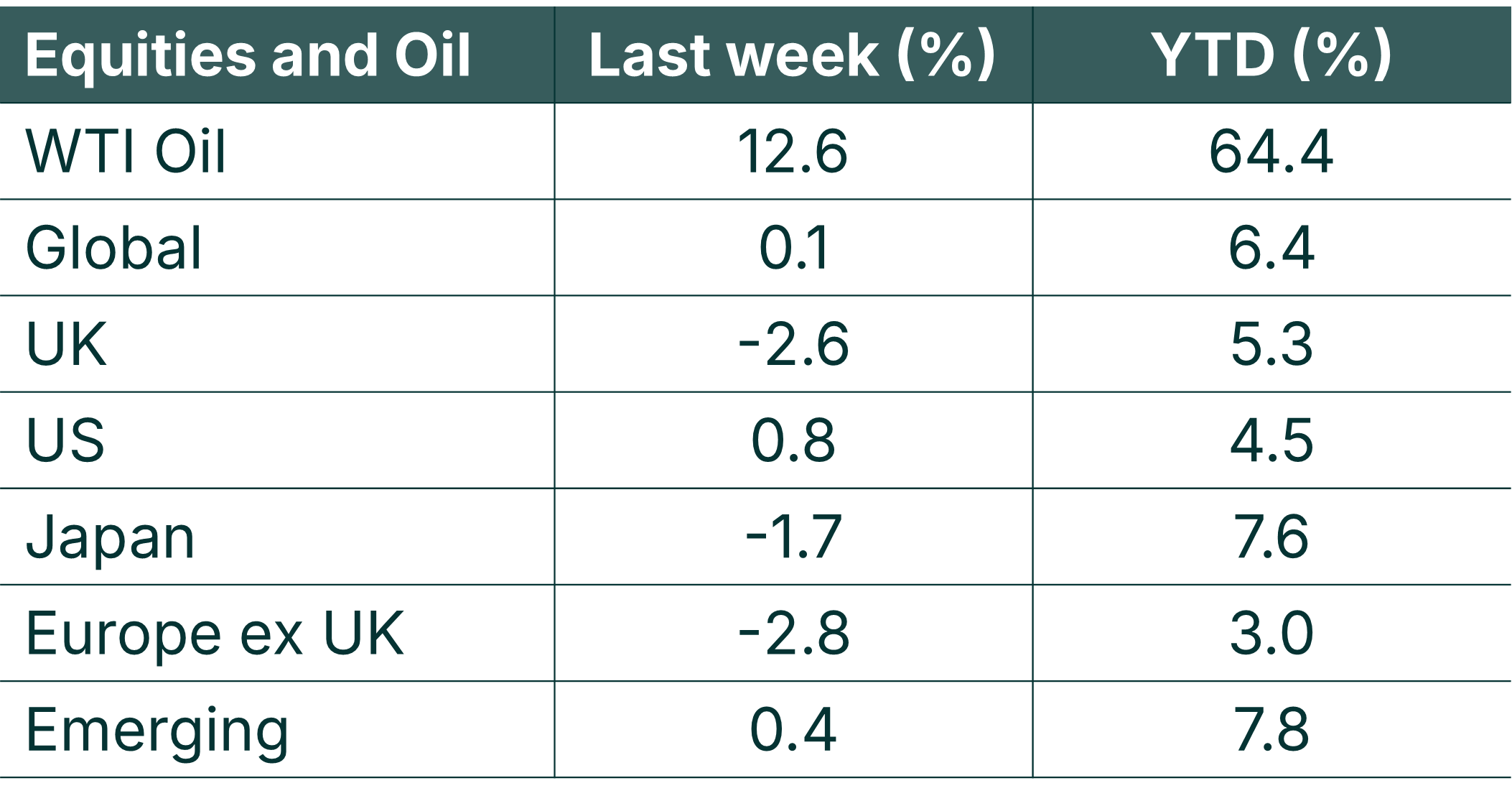
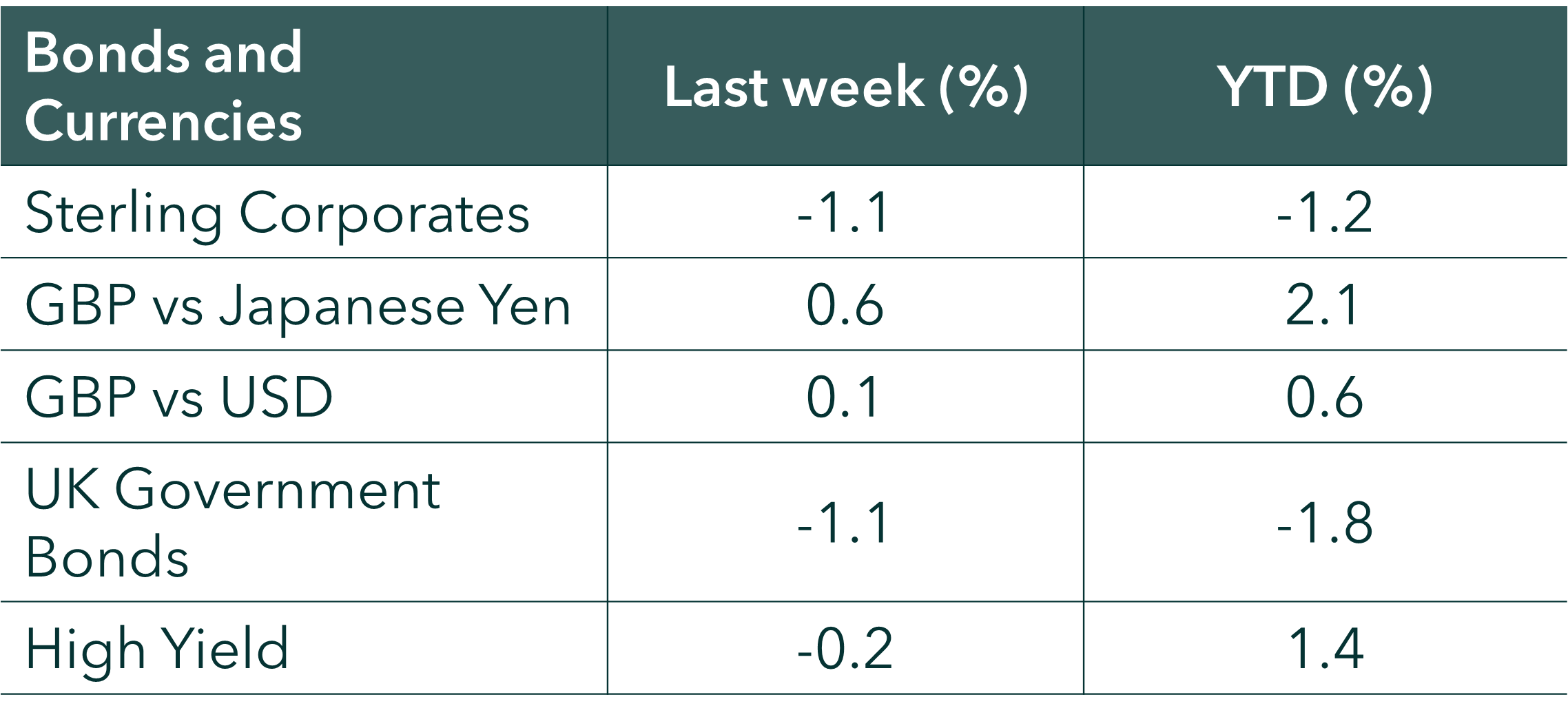
Source: Bloomberg. Currency GBP.
Last week
We saw the US market cross a key milestone, alongside notable corporate developments and earnings updates.
- Corporate earnings were a key highlight. Tesla reported results as the first of the “Magnificent Seven”, setting the tone for large-cap tech.
- Major banks including JPMorgan, Citigroup, and Bank of America delivered strong earnings, pointing to continued resilience in the US consumer and broader economy despite higher interest rates.
- Investor concerns around the US-Iran conflict eased, with focus shifting back to domestic economic strength and company fundamentals.
- Apple also announced a leadership transition, with Tim Cook moving to Executive Chairman and John Ternus appointed CEO.
- And in the UK, inflation data showed CPI rising to 3.3% year-on-year in March, up from 3.0% previously, reflecting ongoing price pressures.
Next week
Earnings season is in full swing, with major global companies reporting and setting the tone for markets.
- US: A busy earnings week is led by major US tech firms, alongside key names across healthcare, energy, and consumer sectors
- In the UK and Europe, key banks, healthcare, and industrial companies are reporting across sectors.
- The Federal Reserve will decide on interest rates, in what is expected to be one of Jerome Powell’s final meetings as Chair. Other key central banks: the ECB, Bank of England, and Bank of Japan will also announce policy decisions.
More details
- Tesla: The company reported a strong first quarter, delivering results ahead of expectations. Earnings came in at $0.41 per share, which were above forecasts, while revenue rose 16% year-on-year to $22.39 billion, reflecting solid global demand. particularly for vehicles. Profitability was also a key positive, with margins reaching 21.1%, supported by a combination of improved vehicle pricing and favourable currency movements.
Despite these encouraging results, investor focus remains on Tesla’s future investment plans. The company has outlined capital expenditure of over $20 billion in 2026, and there is ongoing interest in how this spending will be allocated. Markets are looking for clearer detail on how these investments will translate into sustained growth and long-term returns. - UK Inflation: Recent CPI data suggests that rising energy costs are now beginning to feed through into overall inflation. We’ve seen a noticeable increase in transportation costs, particularly petrol prices, which rose in March compared to a decline at the same time last year. This has contributed to headline inflation reaching 3.3%.
Business surveys indicate that many companies are facing higher input costs, along with ongoing supply chain delays and a drop in confidence. At the same time, consumers are becoming more cautious, with concerns growing around the possibility of a second wave of inflation.
This creates a challenging situation for the Bank of England. Expectations had been moving toward interest rate cuts, but there is now a growing possibility that rates could remain higher for longer or could even rise further if inflation proves more persistent than expected. - Apple: After leading Apple through a decade and a half of unprecedented growth, Tim Cook will transition to the role of Executive Chairman. His place will be taken by John Ternus, a 25-year Apple veteran and a familiar face to those following the company’s product evolution.
Ternus is currently the SVP of Hardware Engineering; and well respected amongst colleagues and peers. During his time at Apple, he has led the engineering teams behind some of Apples most iconic products such as the iPad, AirPods, and he has also been responsible for the transition to Apple Silicon (M-series chips).
The value of investments and the income from them can go down as well as up and you could get back less than you invested. Past performance is not a reliable indicator of future performance.
The content of this article is not intended to be or does not constitute investment research as defined by the Financial Conduct Authority. The content should also not be relied upon when making investment decisions, and at no point should the information be treated as specific advice. The article has no regard for the specific investment objectives, financial situation or needs of any specific client, person, or entity.