Client Login




Last week, global markets experienced a softer week as investors digested the latter stages of second-quarter earnings season, alongside a mixed economic backdrop. Equity markets were generally weaker, led by declines in the US and Japan, whilst UK equities proved more resilient, supported by a stronger oil price and improving sentiment towards the energy sector.
With most major companies having now reported, we have taken the opportunity to reflect on what this earnings season has told us about the current investment environment and the opportunities and risks facing investors. Magnus’ latest article, Earnings, Inflation and the Summer of Ice Creams, explores the key themes emerging from earnings season and what they may mean for markets and investors in the months ahead.
This week’s focus is likely to be dominated by Nvidia’s highly anticipated earnings announcement, alongside several key US economic data releases. More broadly, investor attention is increasingly shifting back towards interest rates, inflation and economic growth.
Last week
- Global equity markets were generally weaker, with Japan and US equities leading the decline, falling 3.6% and 2.1% respectively, whilst UK and European markets remained relatively resilient, both delivering gains of around 0.5%.
- Economic data painted a mixed picture. Japanese GDP data disappointed expectations, whilst Chinese industrial production and retail sales figures suggested growth remains uneven. In the UK, inflation and retail sales data were broadly in line with market forecasts, whilst unemployment remained unchanged at 4.9%.
- Corporate earnings season entered its final stages, with relatively few major companies reporting.
- Geopolitical tensions also remained in focus. Concerns surrounding Iran and potential disruption to oil exports supported energy prices and provided a modest tailwind for UK equity markets given their higher exposure to the energy sector.
This week
Investor attention is likely to increasingly shift away from second-quarter earnings season and back towards the outlook for economic growth, inflation and interest rates.
- Wednesday’s release of Nvidia’s results is expected to be the key corporate event of the week. As one of the largest and most influential companies globally, its outlook for artificial intelligence-related demand may have significant implications for broader equity market sentiment.
- On the economic front, US durable goods orders, personal income and spending data will provide further insight into consumer and business activity. Markets will also be watching comments from Federal Reserve officials for any indications regarding the future path of US interest rates.
- In Japan, August consumer confidence data released later in the week may offer further clues on the strength of domestic demand.
- Geopolitical developments remain a potential source of volatility, particularly given ongoing tensions involving Iran and their implications for global energy markets.
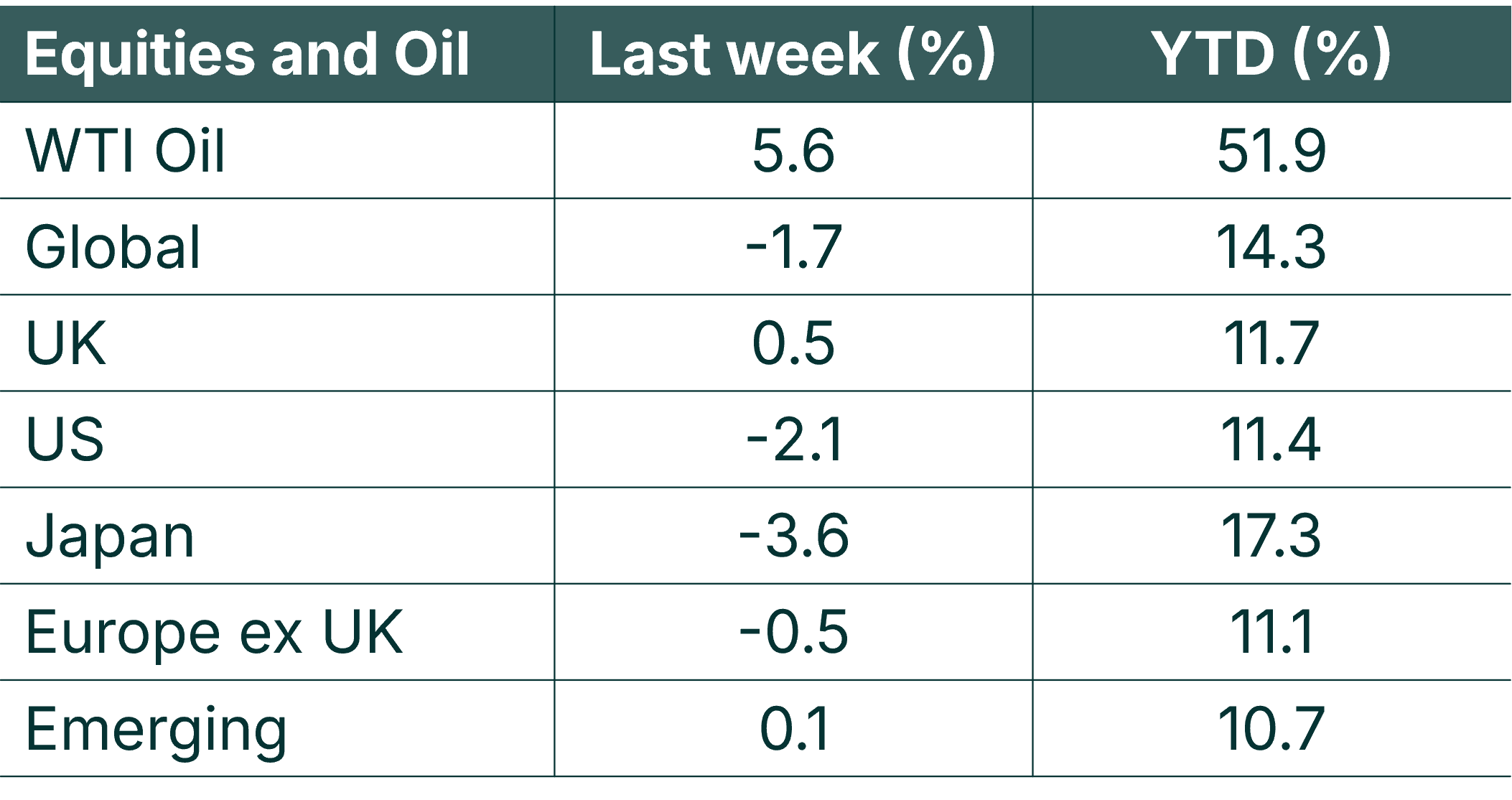
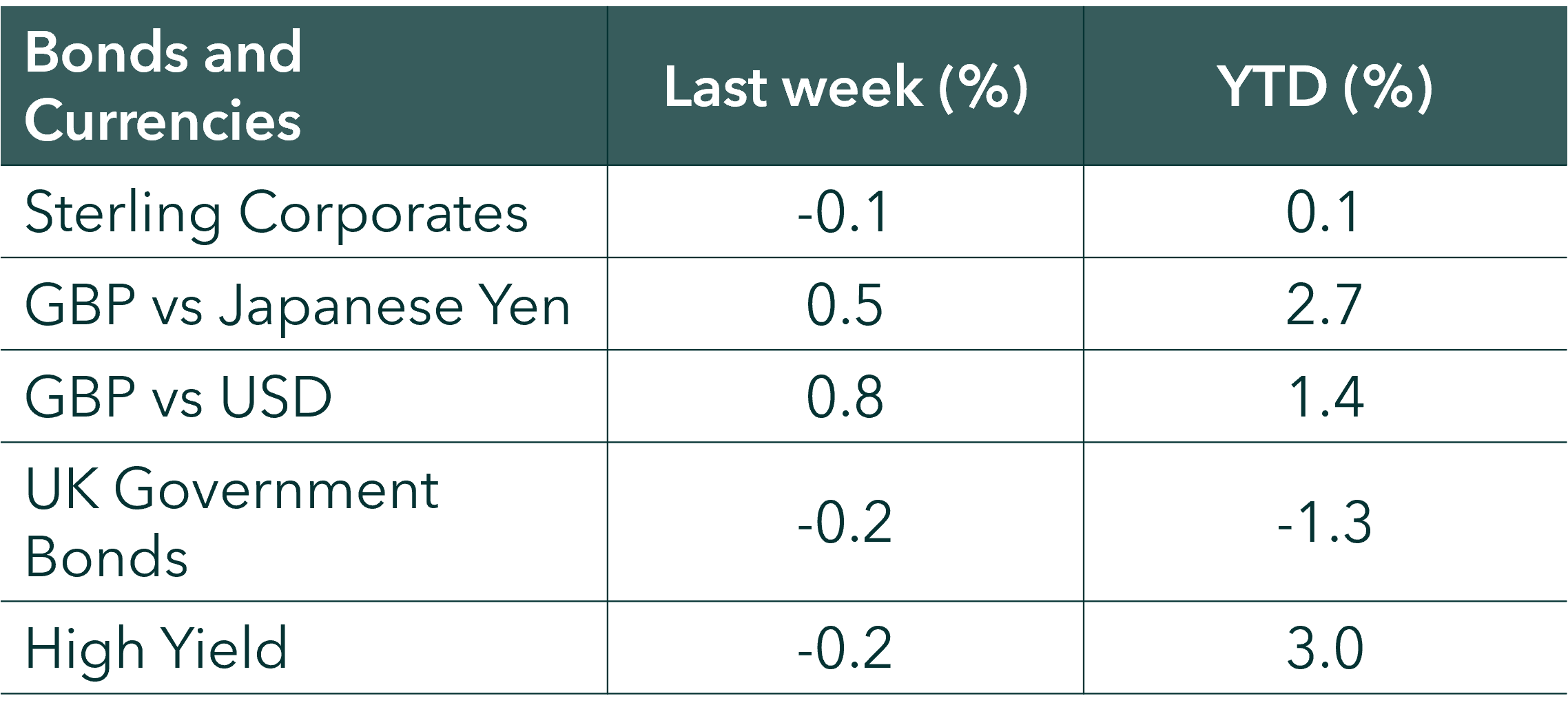
Source: Bloomberg. Currency GBP.
More details
Higher bond yields move back into focus
One of the more notable developments last week was the rise in longer-dated government bond yields. US 30-year Treasury yields briefly reached their highest level since 2007, whilst long-dated UK gilt yields continued to move towards 6%.
Importantly, this was largely a longer-dated bond story. Shorter-dated yields remained relatively stable, suggesting investors are not materially raising expectations for near-term interest rate increases. Instead, markets appear increasingly focused on longer-term inflation and fiscal risks.
The US dollar weakened during the week as expectations of a further Federal Reserve rate rise became less likely, providing some support to global financial conditions.
Economic data paints a mixed picture
Economic releases last week did little to shift the broader narrative. Japanese GDP growth disappointed expectations, whilst Chinese industrial production and retail sales data highlighted the uneven nature of the country’s recovery.
In the UK, inflation, retail sales and labour market data all came in broadly in line with expectations. Germany provided one of the more positive surprises, with economic sentiment improving more than forecast.
Earnings season draws to a close
With most major companies having now reported, investors have been assessing what this earnings season tells us about the health of both businesses and consumers. Last week, Walmart was among the notable disappointments, falling more than 9% following its second-quarter results as investors reacted to margin pressure and signs of a softer consumer backdrop. By contrast, Alibaba reported strong growth in its cloud business, benefiting from rising artificial intelligence adoption across China. Deere also delivered resilient results, with strength in its construction and forestry division helping offset weaker agricultural markets.
Attention now turns to Nvidia on Wednesday. As one of the largest beneficiaries of the AI investment theme, its results and outlook are likely to be closely scrutinised and could have implications well beyond the technology sector.
The value of investments and the income from them can go down as well as up and you could get back less than you invested. Past performance is not a reliable indicator of future performance.
The content of this article is not intended to be or does not constitute investment research as defined by the Financial Conduct Authority. The content should also not be relied upon when making investment decisions, and at no point should the information be treated as specific advice. The article has no regard for the specific investment objectives, financial situation or needs of any specific client, person, or entity.