Client Login




Last week saw global stock markets rise by just over 1% in a very quiet week for newsflow. Nvidia’s earnings were the big event: the company delivered strongly, surprised to the upside, and signaled continued robust growth in the year ahead.
The focus then shifted to US Federal Reserve Chair Kevin Warsh and his speech at the Jackson Hole symposium. Warsh talked tough on inflation, saying that 2% was a “firm, fixed target”. This served to push up short-dated bond yields but was taken positively by markets as it affirmed the Fed’s independence and credibility.
Last week
- Global markets posted decent gains, powered by the US technology sector
- Nvidia’s much awaited earnings surprised to the upside.
- US earnings season closed with profit growth of 52% year-over-year.
- Fed Chair Kevin Warsh affirmed his commitment to tackling inflation.
- Bond markets traded sideways, with credit markets doing best.
This week
- It is a slow start to September, with Friday’s US monthly jobs data, payrolls, the key economic release of the week.
- Costco and Broadcom report their earnings numbers on Wednesday, with M&G reporting on Thursday.
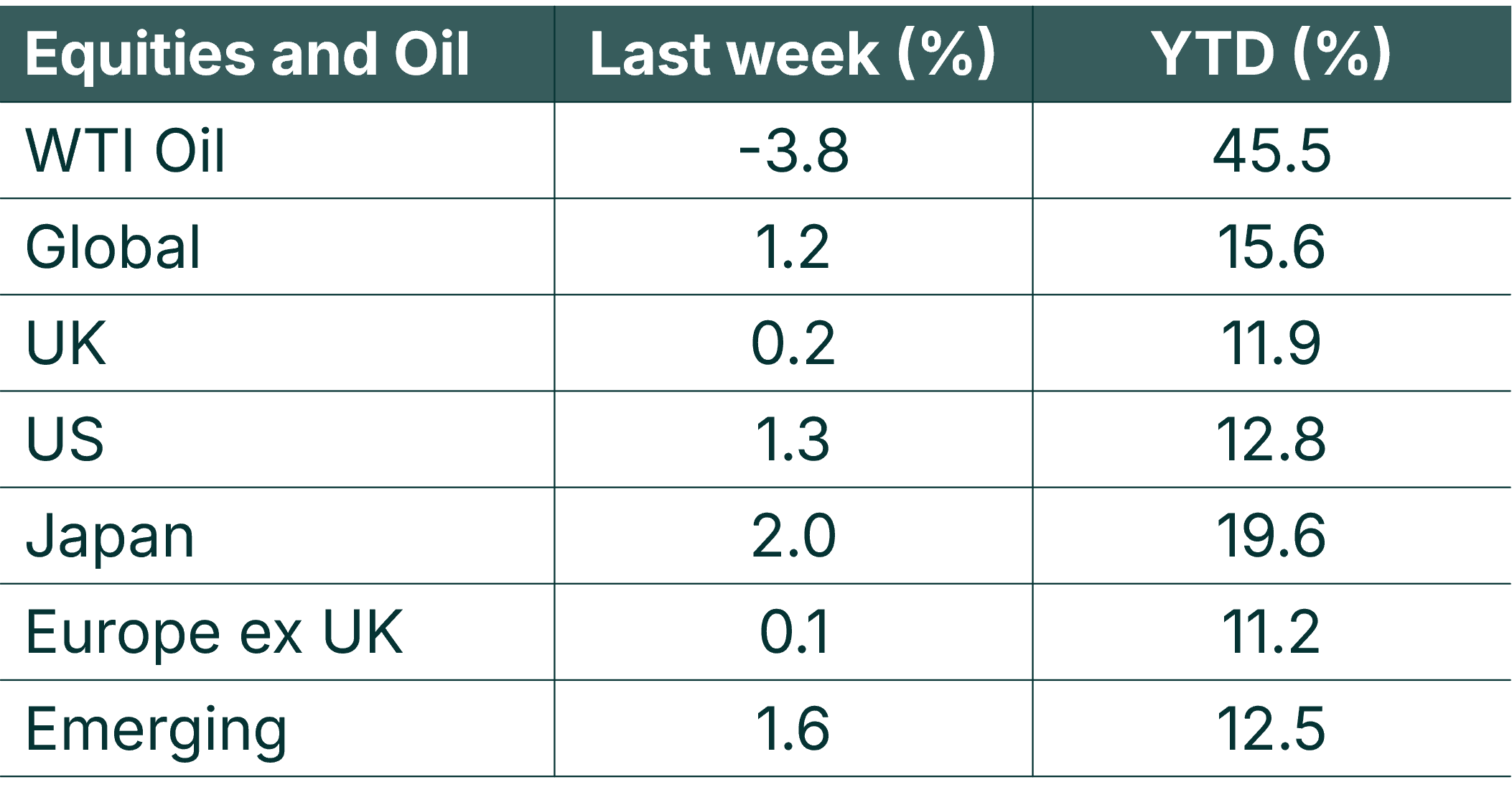
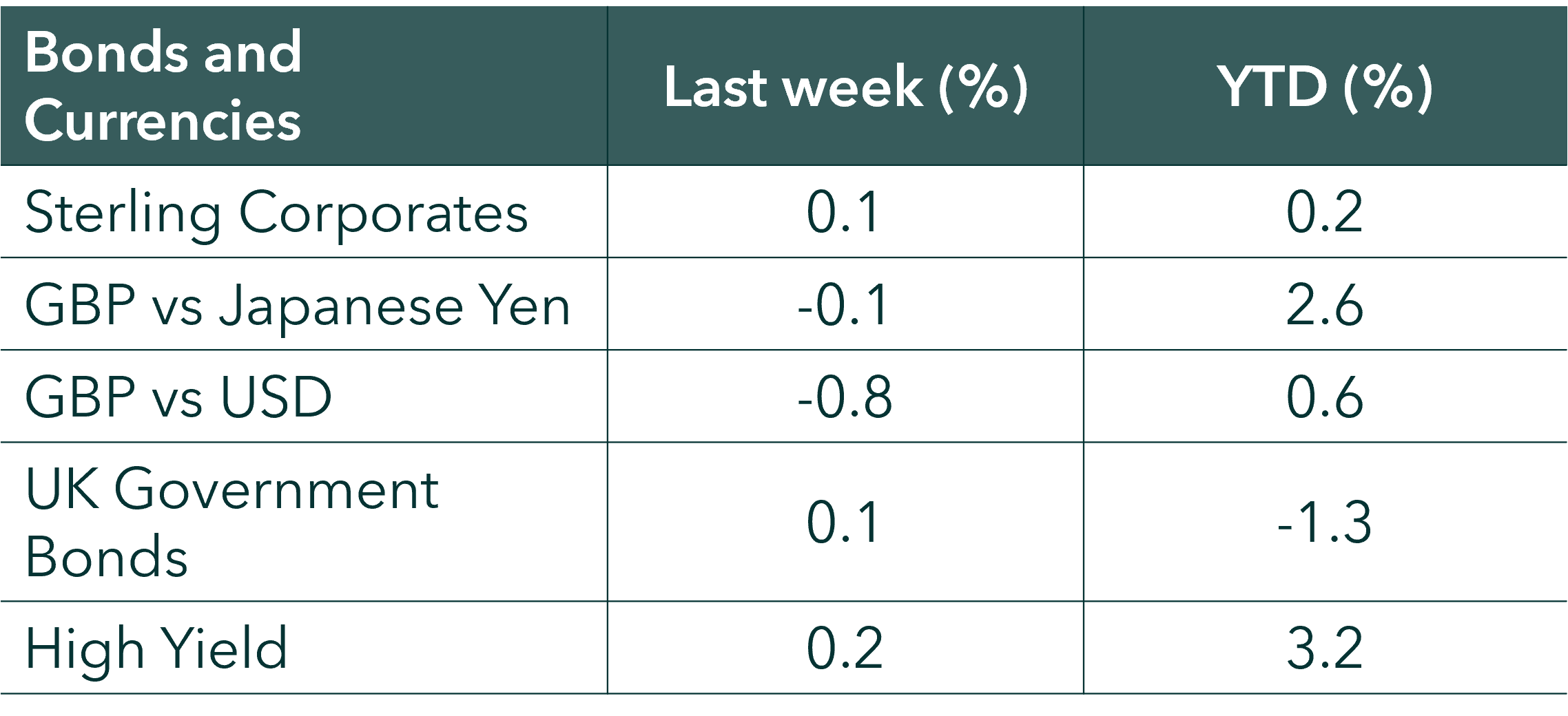
Source: Bloomberg. Currency GBP.
More details
- Global stock markets posted gains of 1.2% last week, powered by the technology sector and helped also by Dollar strength (up 0.8% vs the Pound). Tech was the best performing sector last week, up just shy of 2.5%, taking gains for the month of August to 5.5%. Nvidia, the largest stock in the global share market, helped power the gains on the back of its very strong results.
- Nvidia, which accounts for close to 8% of the US share market, beat expectations for both earnings and revenues, posting $96.2bn of revenue in the second quarter. That represented 106% year-over-year revenue growth. CFO Colette Kress forecast 70% revenue growth for fiscal year 2028, while CEO Jensen Huang said demand “is much greater than 70%” and emphasised that the company is constrained by the amount of product it can supply. Nvidia trades on a forward price/earnings ratio of 18.4x, according to Bloomberg, which is below the broader US share market on 19.6x forward earnings.
- US second-quarter earnings season is now effectively concluded, with 97% of companies having reported. Earnings growth has been exceptionally strong at 52% year-on-year, more than double the 23.1% growth rate analysts at FactSet expected at the end of June 2026. That strength has helped lower the market valuation, with the US share market now trading at 19.6x forward earnings, below its five-year average of 19.9x.
- August was a good month for global stock markets, with the global index rising by about 2.7%. UK share markets were more subdued, with the broad UK index up around 0.7%, although the more domestically focused FTSE 250 rose by about 4.3%, helped by better-than-expected earnings and takeover activity.
- US Fed Chair Kevin Warsh gave his much-anticipated Jackson Hole speech last Friday. Warsh talked tough on inflation, calling the 2% PCE goal a “firm, fixed target”. This led US bond futures markets to increase their pricing for US interest rate hikes, as multiple measures of US inflation are trading above 2%, with the market now pricing a 59% chance of an interest rate hike at the 16th September meeting. This caused short-dated US bond yields to rise on the week.
- Bond markets were pretty flat last week, with credit markets outperforming modestly as spreads tightened.
The value of investments and the income from them can go down as well as up and you could get back less than you invested. Past performance is not a reliable indicator of future performance.
The content of this article is not intended to be or does not constitute investment research as defined by the Financial Conduct Authority. The content should also not be relied upon when making investment decisions, and at no point should the information be treated as specific advice. The article has no regard for the specific investment objectives, financial situation or needs of any specific client, person, or entity.