Client Login




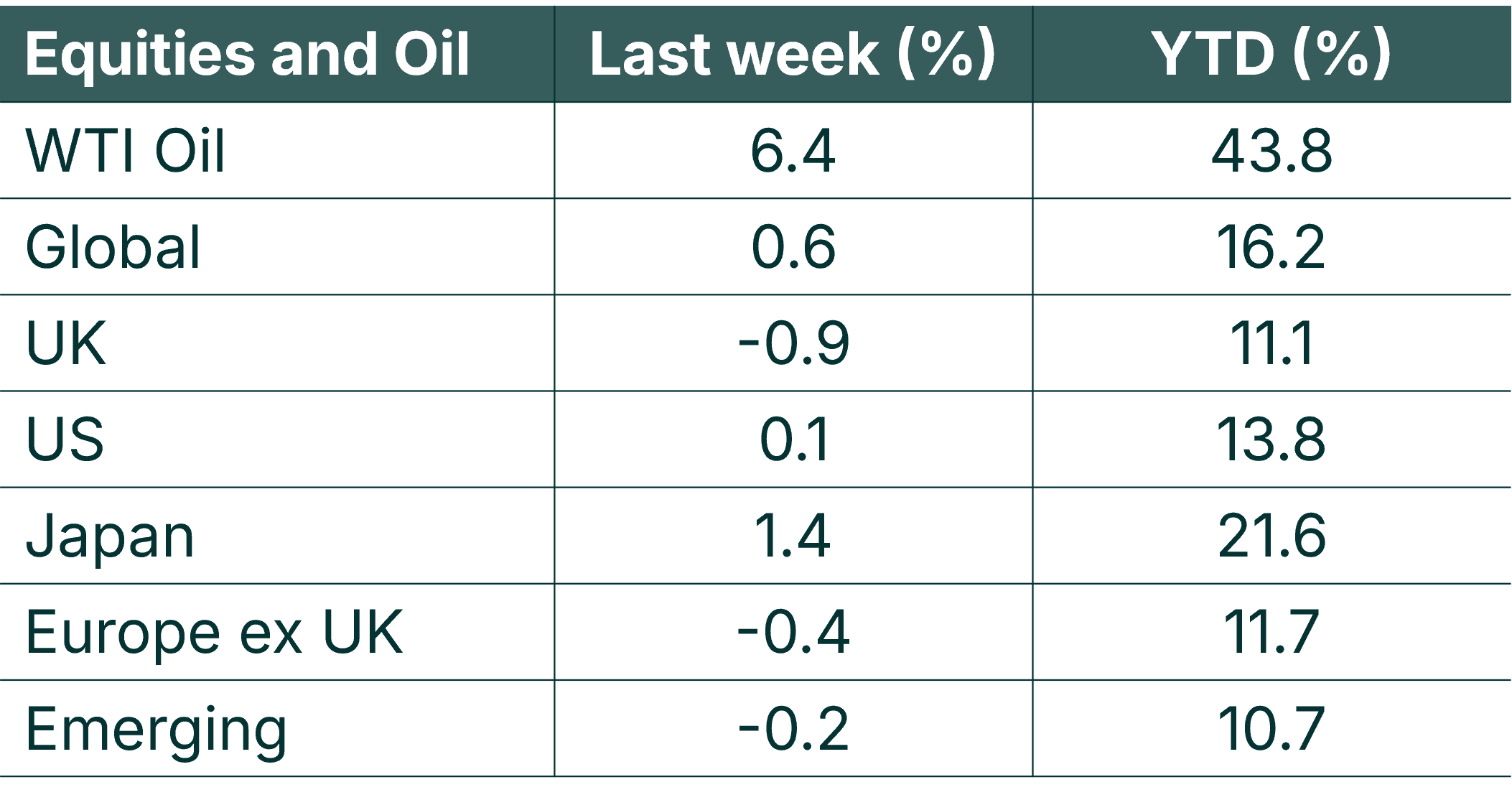
Global markets posted modest gains last week, extending a strong run which has seen them rise by 3.3% so far in August.
The focus was on US economic data, with inflation easing and retail sales slowing. This helped push back expectations for the next increase in interest rates from the US Federal Reserve.
This week is a relatively quiet one, with the focus on UK economic data. The corporate reporting calendar is also light, with Target and Walmart among the larger companies reporting.
Last week
- Global stock markets posted modest gains, led by Japan and the energy sector.
- UK shares gave up ground but remain strong recent performers.
- US inflation eased to 3.4%.
- Bond futures markets pushed back expectations for the next US interest rate hike.
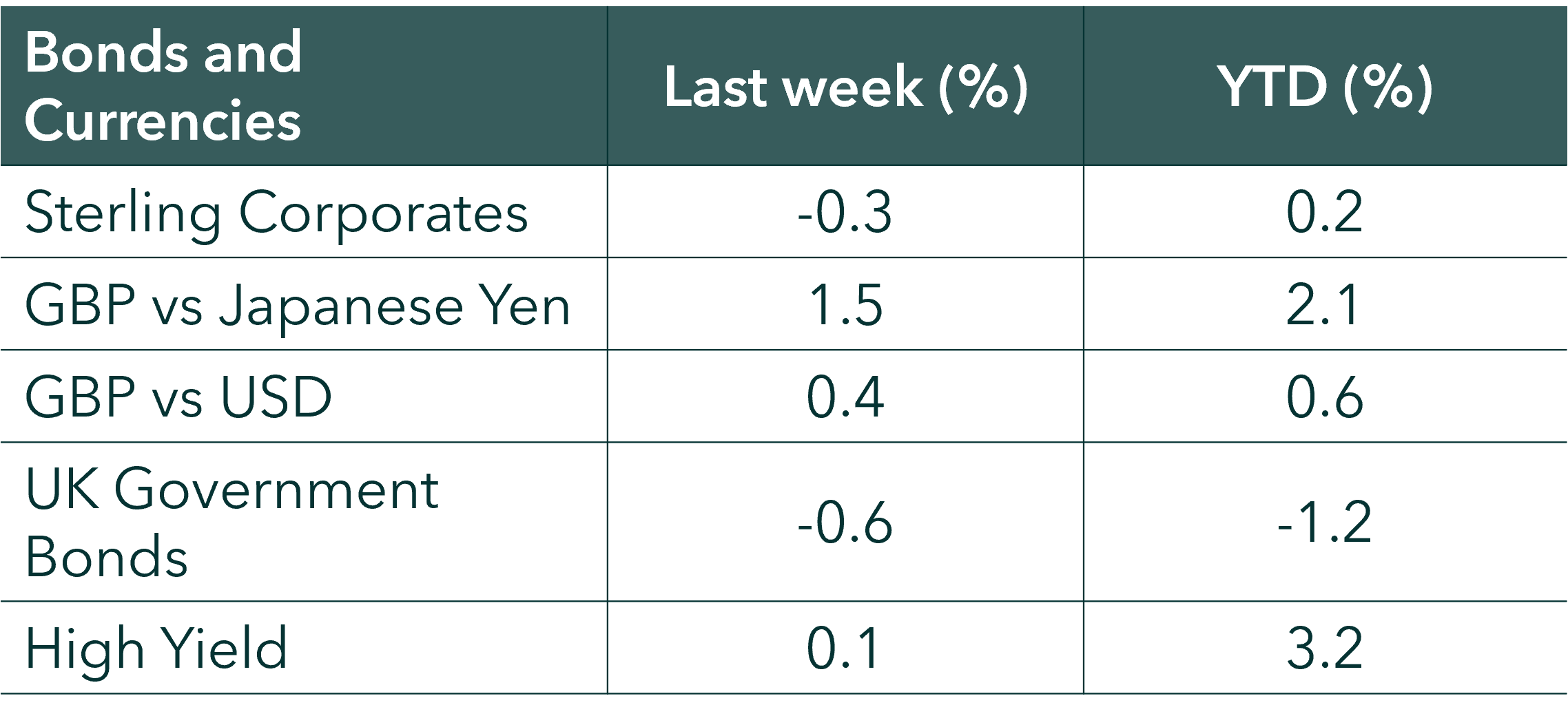
- Government bond markets gave up some ground, whilst corporate bond markets posted modest gains.
This week
- UK economic data features strongly this week, with inflation data due out on Wednesday, jobs data out on Tuesday and retail sales out on Friday.
- The Federal Reserve minutes (from the 29th July meeting) will be released on Wednesday night (UK time).
- It’s a quiet week on the corporate reporting front, with Target reporting on Wednesday and Walmart reporting on Thursday.
- Attention will increasingly turn towards US market heavyweight Nvidia, which reports on 26th August.
Source: Bloomberg. Currency GBP.
More details
Global stock markets rose by around 0.6% last week, with the energy sector, up 5%, the strongest performer.
At a country level, Japan performed best, rising by 1.4%. The market was supported by gains in technology, which accounts for close to 20% of the Japanese equity market, alongside export-oriented companies benefiting from a weaker yen. Bank shares also rose as investors increased expectations for a rate rise at the Bank of Japan’s 18th September meeting.
The UK equity market gave up some ground last week, falling by 0.9%, as healthcare — around 11% of the index — continued to weigh on returns. Nevertheless, UK equities remain among the stronger performers so far this quarter, with the broad market up 3.7% quarter-to-date, led by gains from the oil & gas and banking sectors.
UK shares have also benefited from a surge in takeover activity. This has been particularly supportive of the mid-cap FTSE 250 index, which is up 3.9% month-to-date and 8.5% quarter-to-date.
US CPI inflation came in at 3.4% for the 12 months to July, while core CPI was 2.5%. This marked the second consecutive month in which both headline and core inflation eased on a year-on-year basis. Importantly, longer-term inflation expectations also remain relatively contained, with US 10-year breakeven inflation at around 2.3%.
US retail sales came in below expectations last week, falling by 0.6% month-on-month. Despite this, consumer spending remains an important driver of US economic growth.
The US bond futures market ended the week pricing in a 31% probability of an interest rate hike at the Federal Reserve’s September meeting, down significantly from 71% at the end of July. As of Friday’s close, futures markets were pricing in just one further US interest rate hike this year, at the December meeting.
The recent data therefore points towards some moderation in the US economy rather than a sharp deterioration. The Atlanta Federal Reserve’s GDPNow model is currently estimating annualised real GDP growth of 4.3% for the third quarter. This remains a strong rate of growth, despite the estimate having fallen following some of the softer economic data released last week.
Taken together, cooling inflation and softer employment and retail-sales data have reduced some of the pressure on the US interest-rate outlook, while broader measures of economic activity continue to point towards a relatively resilient economy.
Bond markets gave up ground last week, with UK gilts falling by 0.6%, whilst high yield markets posted modest gains as credit spreads tightened. US high yield spreads closed out the week trading at 266 basis points, with US investment grade spreads trading at 74 basis points.
The value of investments and the income from them can go down as well as up and you could get back less than you invested. Past performance is not a reliable indicator of future performance.
The content of this article is not intended to be or does not constitute investment research as defined by the Financial Conduct Authority. The content should also not be relied upon when making investment decisions, and at no point should the information be treated as specific advice. The article has no regard for the specific investment objectives, financial situation or needs of any specific client, person, or entity.