Client Login




Cash is useful, familiar and reassuring. But for clients with larger taxable balances, the real question is not just what interest rate they can get… It is what they can actually keep after tax.
Many clients have benefitted from higher savings rates over the last few years. After a long period where cash earned very little, savings accounts and fixed-term deposits have finally started to feel useful again.
However, the question is not just what rate a client can get. It is what they can actually keep.
Once available savings allowances have been used, interest from cash deposits may become taxable. For higher and additional-rate taxpayers, this can make a strong headline rate look less attractive after tax.
For example, a 4.73% cash rate, does not necessarily mean a 4.73% return in your pocket.
This is where gilts can be worth considering.
A gilt is a UK Government bond. Investors:
- Lend money to the UK Government,
- Receive regular interest during the gilt’s life, and
- Receive money back (capital repaid) at maturity, assuming the gilt is held to that date.
Gilts are investments rather than cash deposits, so values can move, particularly if sold before maturity. However, short-dated gilts are generally considered one of the lower-risk areas of investment markets.
For UK individuals, the interesting opportunity is in short-dated, low-coupon gilts.
- Capital gains on qualifying gilts are generally exempt from Capital Gains Tax.
- The coupon (interest) remains taxable as income.
- By using low-coupon gilts, most of the expected return can come from tax-free capital growth rather than taxable income.
- Whereas a normal UK bank account will have all of the return taxed as savings interest.
Put simply, the attraction is not necessarily a higher headline return. It is the potential for a better after-tax outcome. In practice, this is not a case of cash versus gilts in all circumstances. It is about making sure different pots of money are matched to the right job.
This does not mean gilts should replace emergency cash. Clients still need accessible money for short-term needs and unexpected events. But where larger cash balances are sitting outside ISAs or pensions, particularly where clients have known future spending plans, it may be worth asking whether that money still needs to remain in cash.
This can be a useful annual review conversation with your financial adviser. Cash is familiar and important, but it can also become lazy if it is held without a clear purpose. For suitable clients, short-dated gilts can provide a simple, transparent and relatively low-risk way of helping surplus money work harder, while keeping tax firmly in the conversation.
Gilts can be pegged as ‘dull and boring’. They might not be the flashiest investment idea. But for the right client, sometimes the quiet solutions are the ones doing the most useful work.
Sometimes the smart bit is not earning more. It is keeping more.
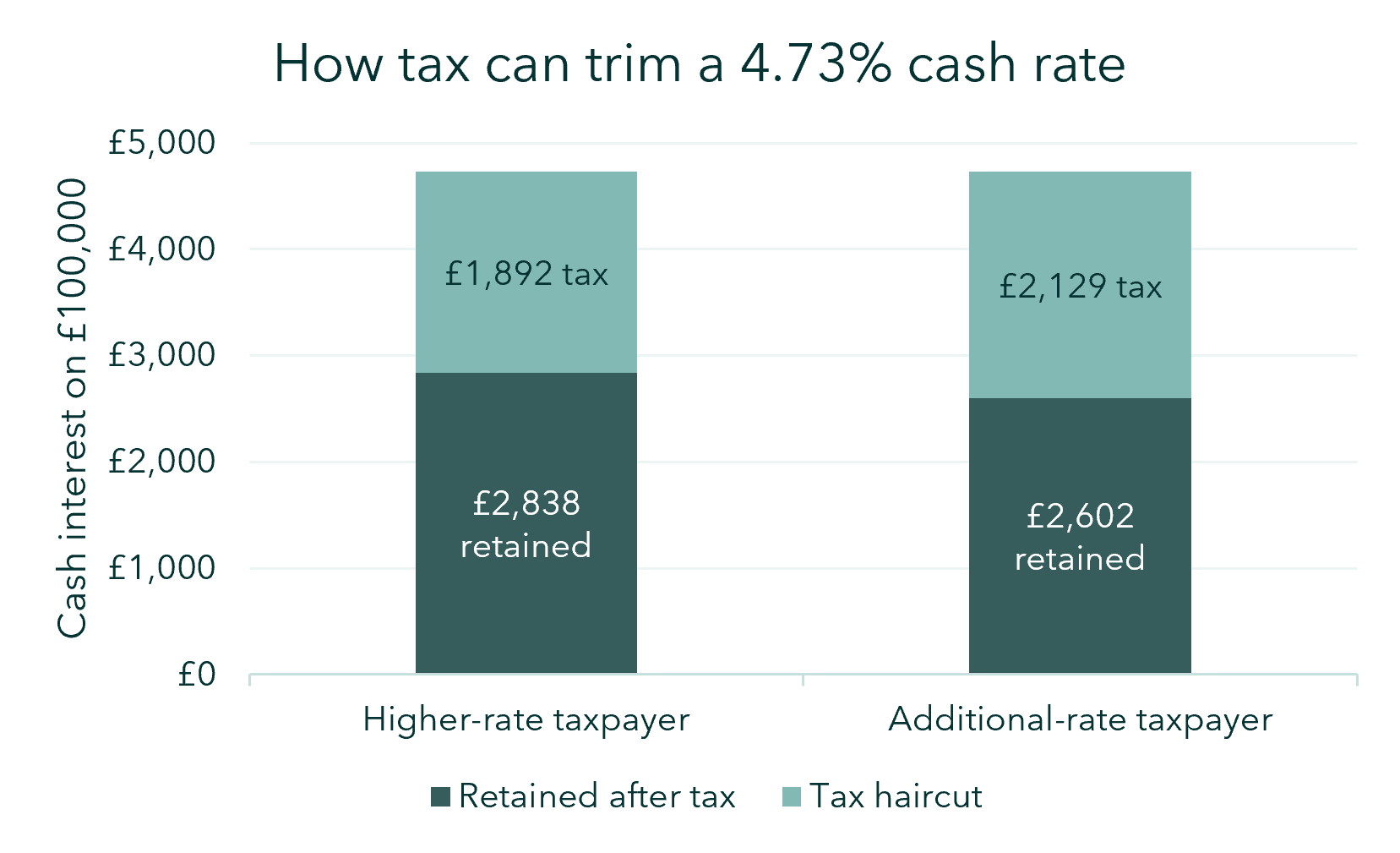
Figure 1. Illustrative only. Shows how a 4.73% cash rate can be reduced by income tax for higher and additional-rate taxpayers. The Personal Savings Allowance has not been included in these figures.
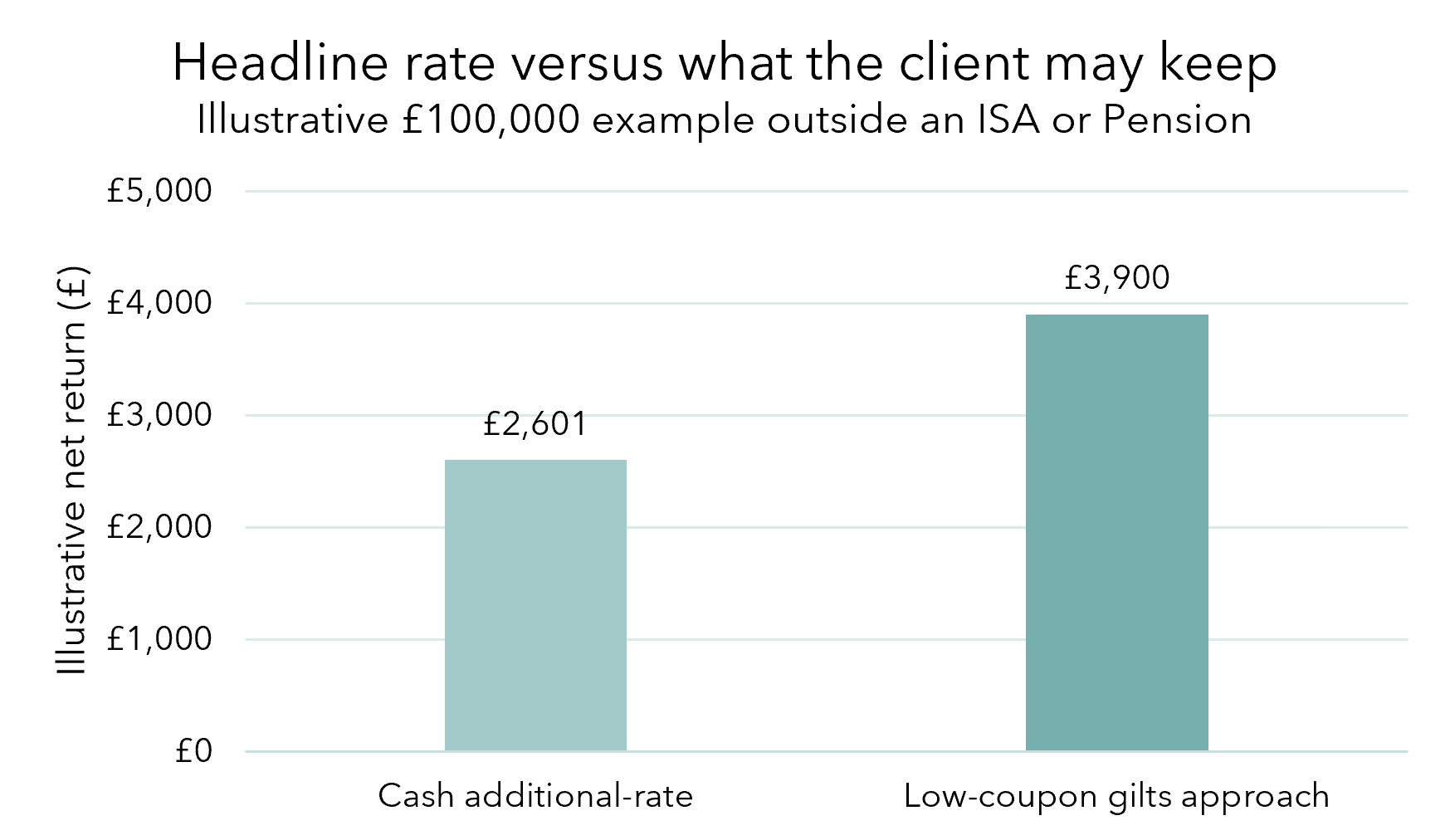
Figure 2. Illustrative only. Compares taxable cash with a low-coupon gilt approach for a £100,000 balance outside an ISA or pension.